
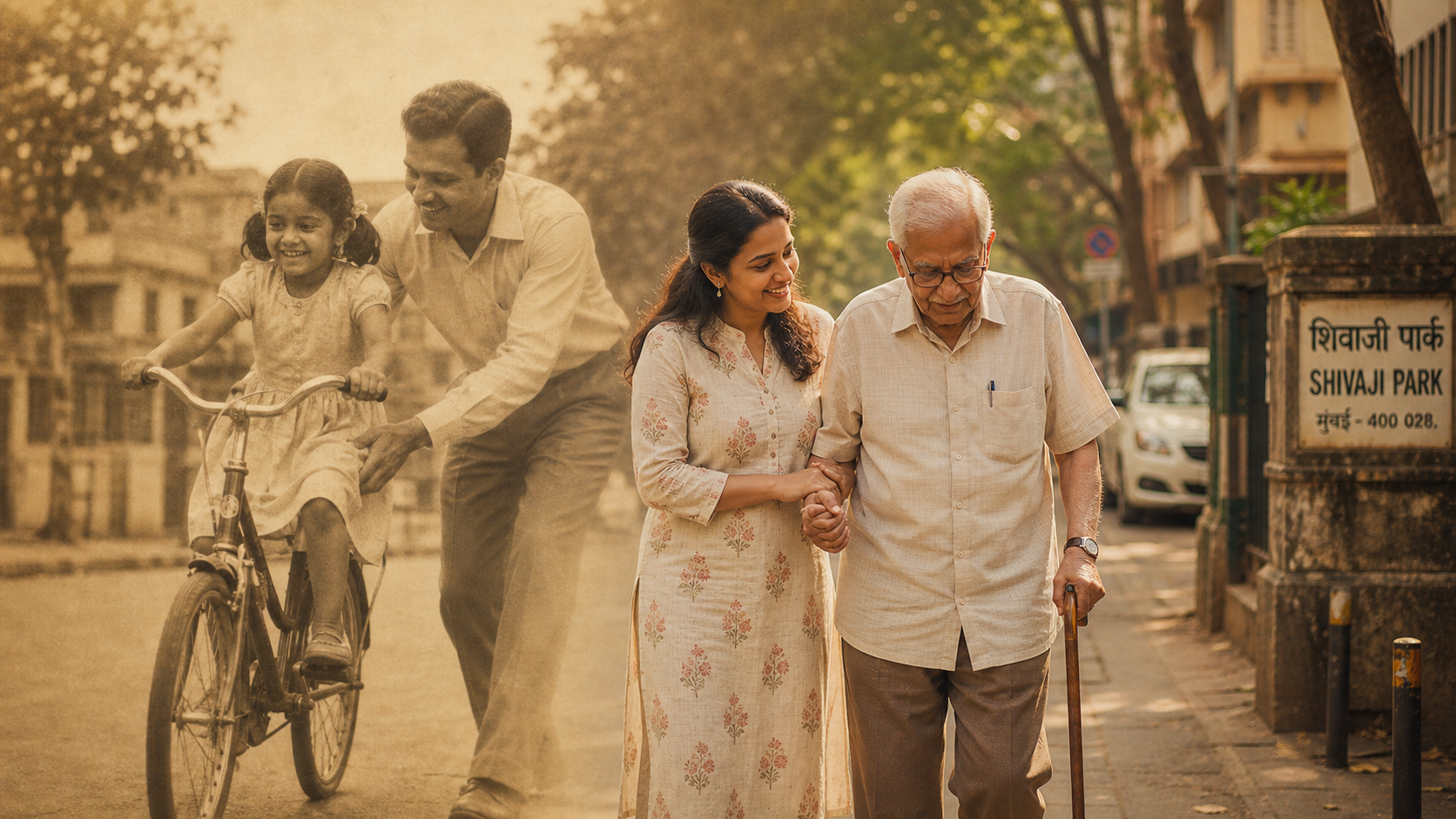
Seven years of studying cancer in an American lab did not prepare me to face the real deal when it hit my father – thrice. His decades of smoking first led to a diagnosis of bladder cancer. It was minor and he recovered from the surgery, only to develop an aggressive laryngeal cancer less than a year later. He underwent radiation and had a relapse 6 months later that turned terminal.
During this journey everyone, including myself (and a couple of doctors!), expected me to know and guide treatment choices, dos and don’ts etc. I was blinded by what I thought I knew and completely unprepared for how fast his cancer would take over. Here are some things I wish I had done better.
This part is about how mindsets need to change – for the patient, primary caregiver and immediate family.
Tough love
Tough love is easy to understand in theory but truly difficult in practice, especially when you have to be strict with a loved one who raised you and is going through radiation or chemo. Its importance cannot be undermined, however. You have to understand the oncologist’s instructions, and enforce the dos and don’ts of the regimen with your patient, family, relatives and caregivers.
My parents would travel 2 hours one way in Mumbai traffic for my father’s radiation session, return home exhausted, unable to do much other than eat a little and crash, only to repeat it all over again the next day. But after each session, my father was required to gargle warm water 5–10 times, inhale steam and cough out all the mucus. He used to be so exhausted he would maybe do this a couple of times and give up. And I’d let him.
This was a mistake. The mucus that remained inside led to fibrosis and months later we found the area around his larynx had become woody and inoperable.
Tough love, in this context, would have meant insisting. Sitting with him through all 10 gargles. Timing the steam. Being the annoying, relentless drill sergeant in the room because the price of “let it go for today” was far too high. It feels cruel in the moment. It is actually an act of protection.
Be the adult
Assume the parent is now an overgrown child; they will not want to eat right, follow the treatment regimen, or give up long‑standing habits. You have to educate and convince them about why a certain food they don’t like is important, or why they can no longer entertain certain behaviours. But you also have to monitor them and ensure that at least the most important regimens are being followed.
For instance, I read and explained the dos and don’ts after radiation to both my parents. One of the absolute no’s was smoking. My father had declared that he had quit smoking after the bladder cancer diagnosis the previous year, so I simply mentioned that it said no smoking, which he agreed was not a concern anymore. However, I failed to stress that smoking after radiation can lead to a relapse and hence it was vital that he not smoke anymore. I learned later that he did smoke after the radiation was completed and he did relapse a few months later.
Being the adult, I realised too late, is not just about reading the instructions out loud. It is about spelling out the consequences, over and over, in simple, almost patronising language if needed. It is about choosing to be “dramatic” about risks rather than assuming everyone in the room has joined the dots the way you have in your head.
The family needs to adapt to the patient’s needs. Everyone has to accept that this is a paradigm change in their life, and each one will need to modify their daily living. The patient will not have the same foods, the same energy for daily activities, or be as independent. They will need physical and emotional support, even if it is a benign diagnosis.
And yet, in the middle of all this enforcing and monitoring, don’t forget to also just be with your parent. Watch a cricket match together. Let him win an argument he absolutely doesn’t deserve to win. Laugh at the same old story you’ve both heard fifty times. The regimen keeps him alive; the laughter reminds him there’s a life worth keeping alive.
If you’re reading this at the start of your own parent’s cancer journey, here’s the mindset shift I wish someone had handed me on a Post‑it:
You are no longer just the child in the room.
You are the adult, the advocate and sometimes the enforcer. You will feel like the bad guy on some days.
But if you can hold that line with love, you may save your parent from consequences they did not fully understand – and save yourself from at least some of the “I wish I had…” that comes later.
Leave a Reply